CERTIFIED CLEAN ROOMS – PHYSICAL DATA RECOVERY – ON-SITE

Clean Room Hard Drive Recovery

Clicking, Beeping & Dropped Drives

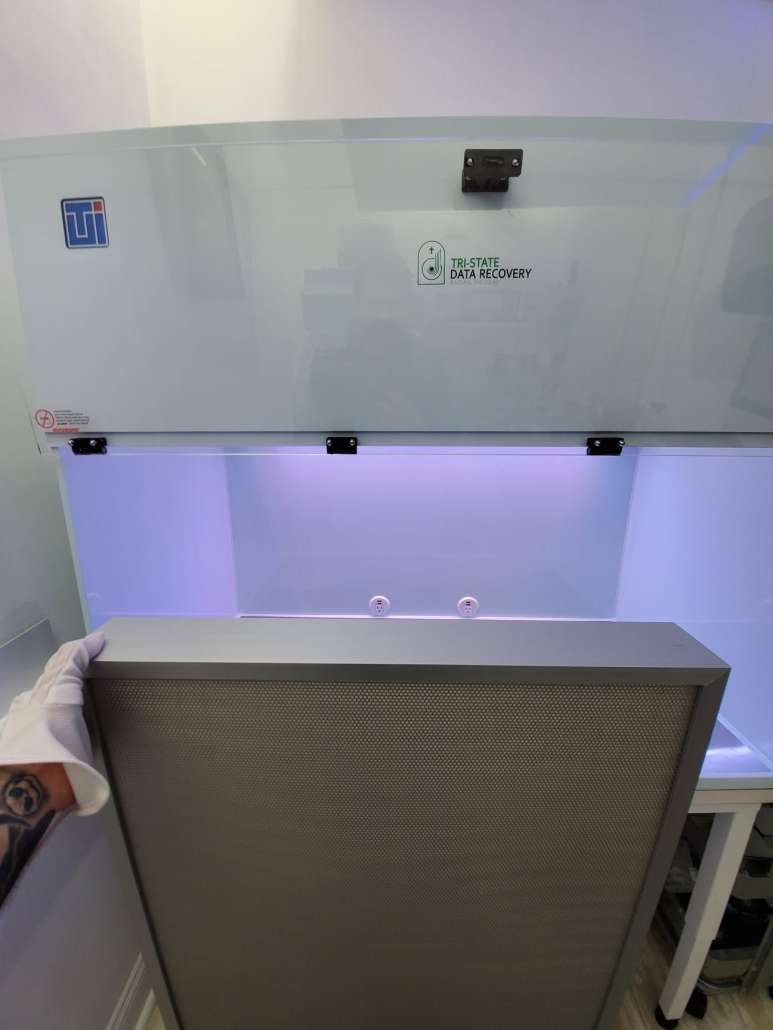
This is the deepest tier of hard drive recovery — the cases where the drive itself must be opened: crashed read/write heads, seized spindle motors, heads stuck to the platters after a drop. Work at this level happens exclusively inside our certified ISO Class 4 clean room in Montgomery County, where damaged components are replaced with precision-matched donor parts. This is the recovery most shops advertise — and almost none actually perform themselves.

⚠️ If your drive is clicking, grinding, or beeping — every additional power-on is doing damage. Damaged heads in contact with spinning platters scrape away the magnetic surface where your data physically lives. Scored platters are the one thing no laboratory on earth can recover. Power it off, and leave it off.

Your HDD Failed.
Don’t Make It Worse.

Every week we receive a case from a devastated client who trusted the wrong company. “But they promised that running software overnight on my drive wouldn’t damage it further.” Often, after receiving a case that has already been unprofessionally tampered with by a computer shop, we see added complications, further media damage (data loss), or even complete destruction — while the client has no idea. Everyone loves a bargain. But with data recovery, you may only get one chance. #mydatamatters

Trusted by

WHY THE ENVIRONMENT IS EVERYTHING

What a Certified Clean Room Actually Does

A dust particle is a boulder at platter scale

Inside a running hard drive, the read/write heads fly on a cushion of air thinner than a particle of smoke above platters spinning at 5,400–15,000 RPM. A single grain of ordinary household dust landing on a platter is, at that scale, a boulder on a highway — it will be struck by the heads and dragged across the magnetic surface holding your data.

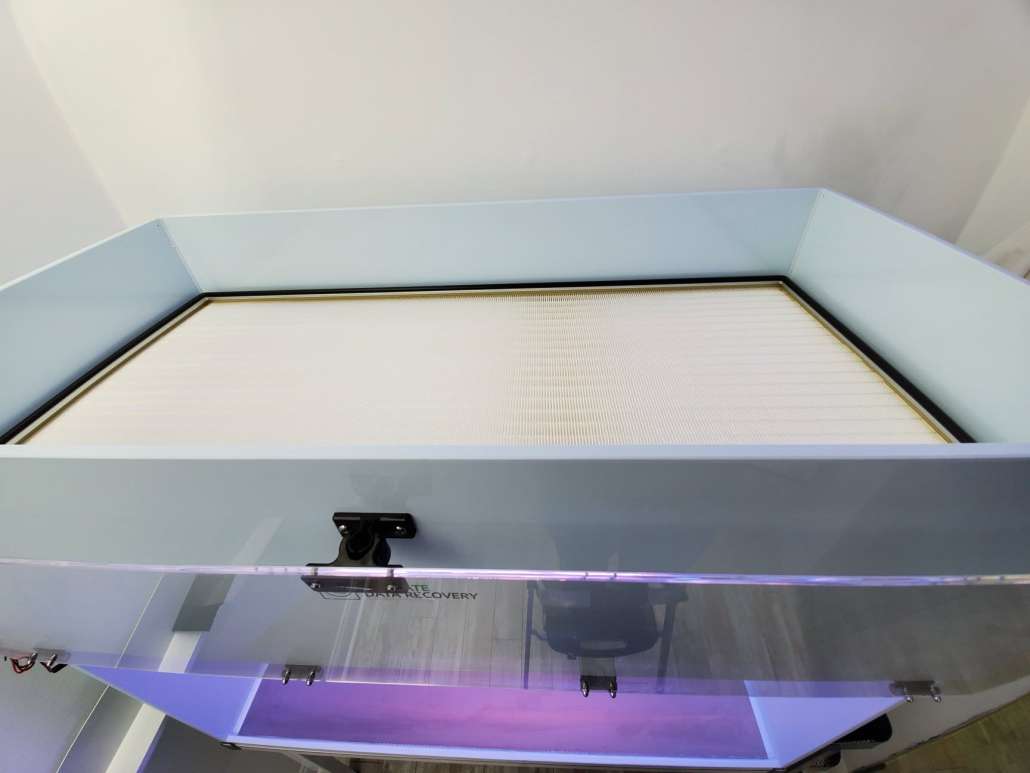
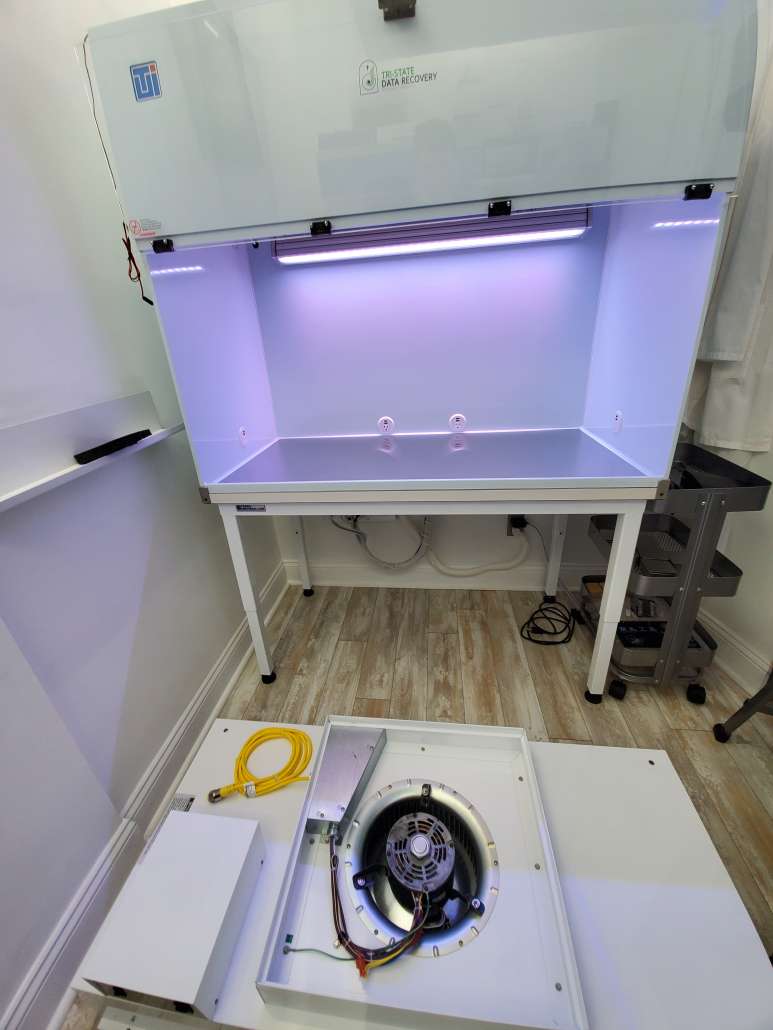
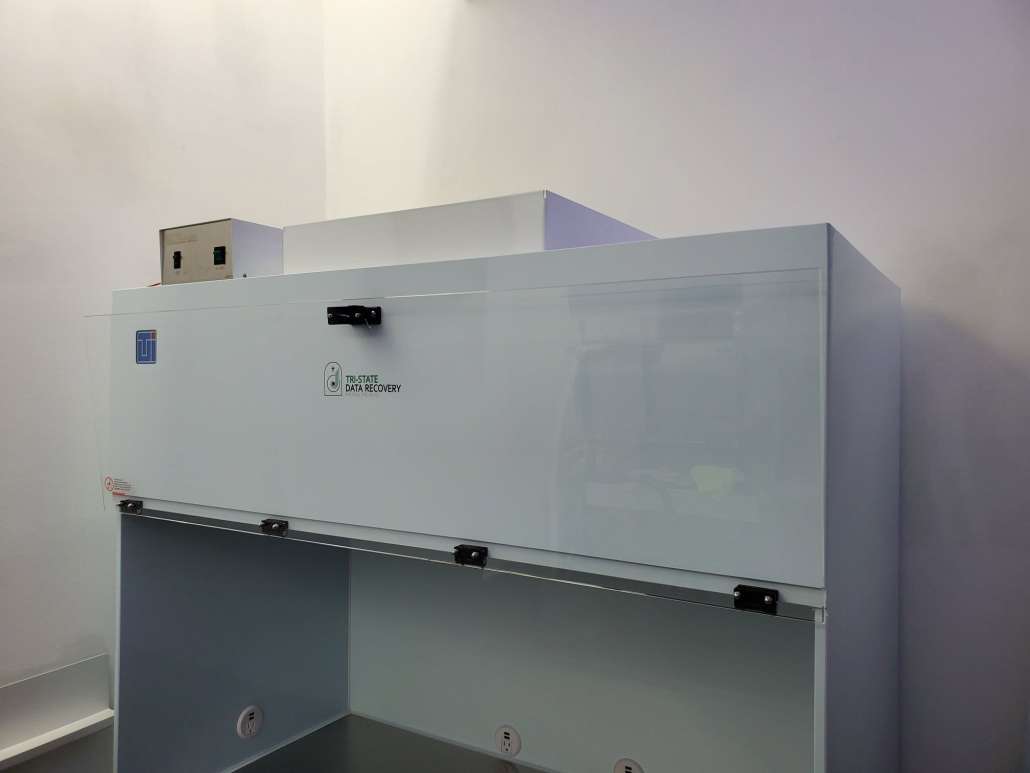
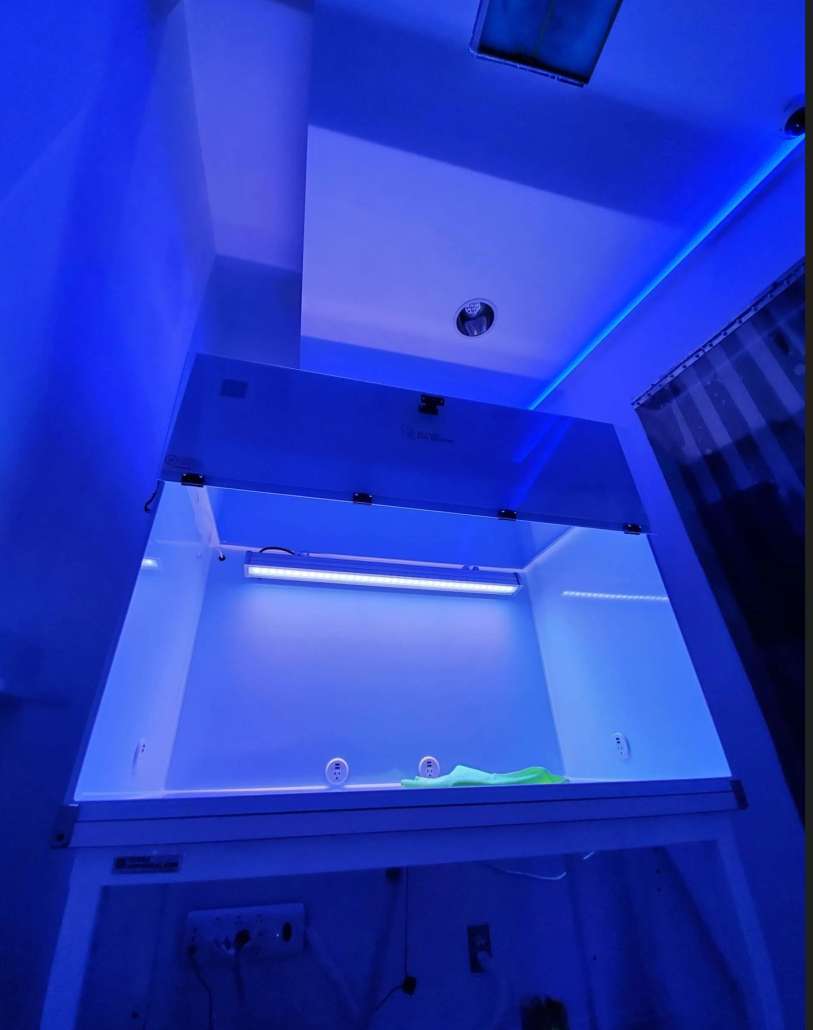
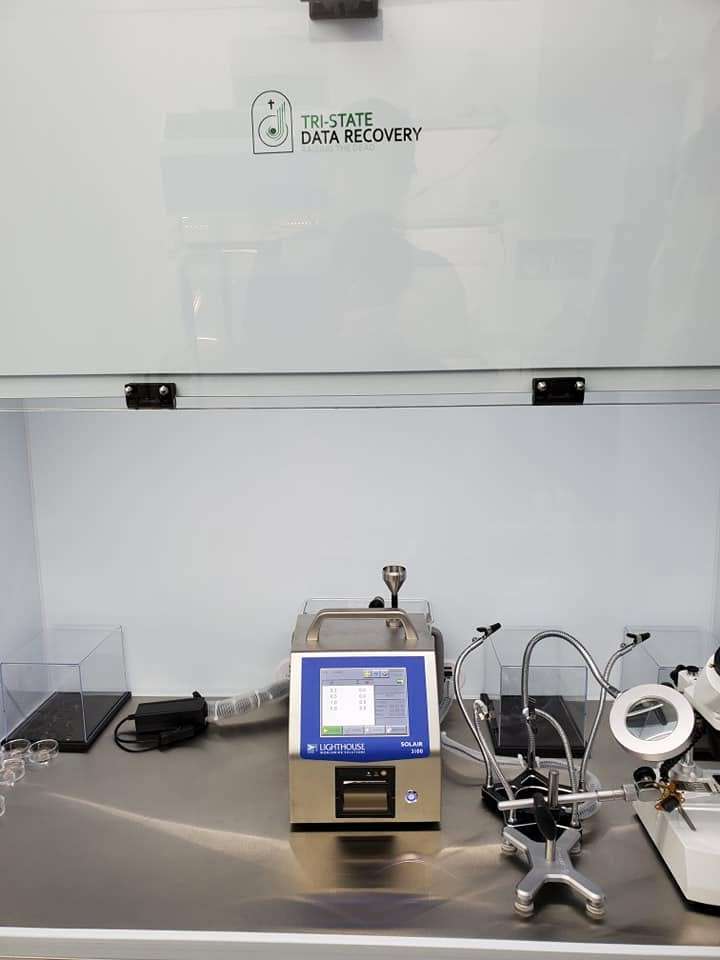
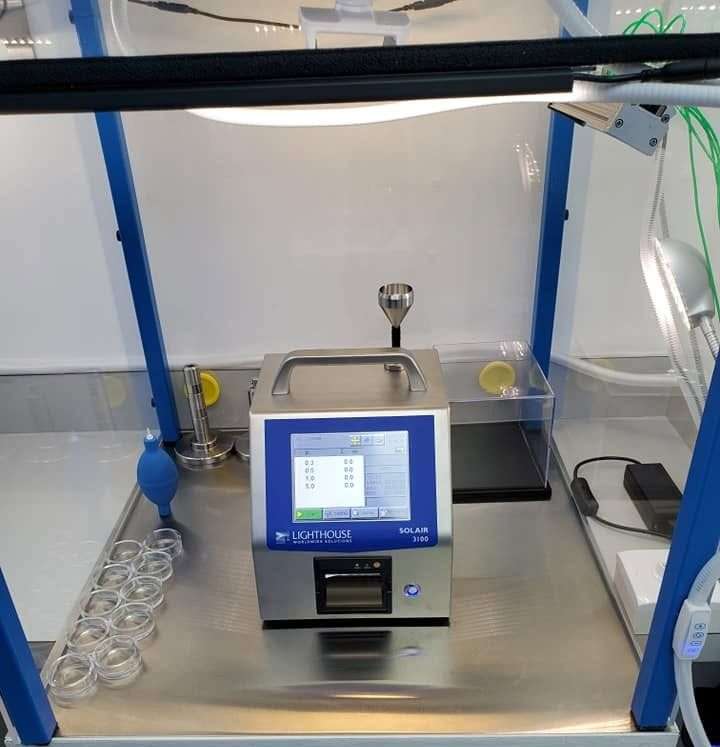
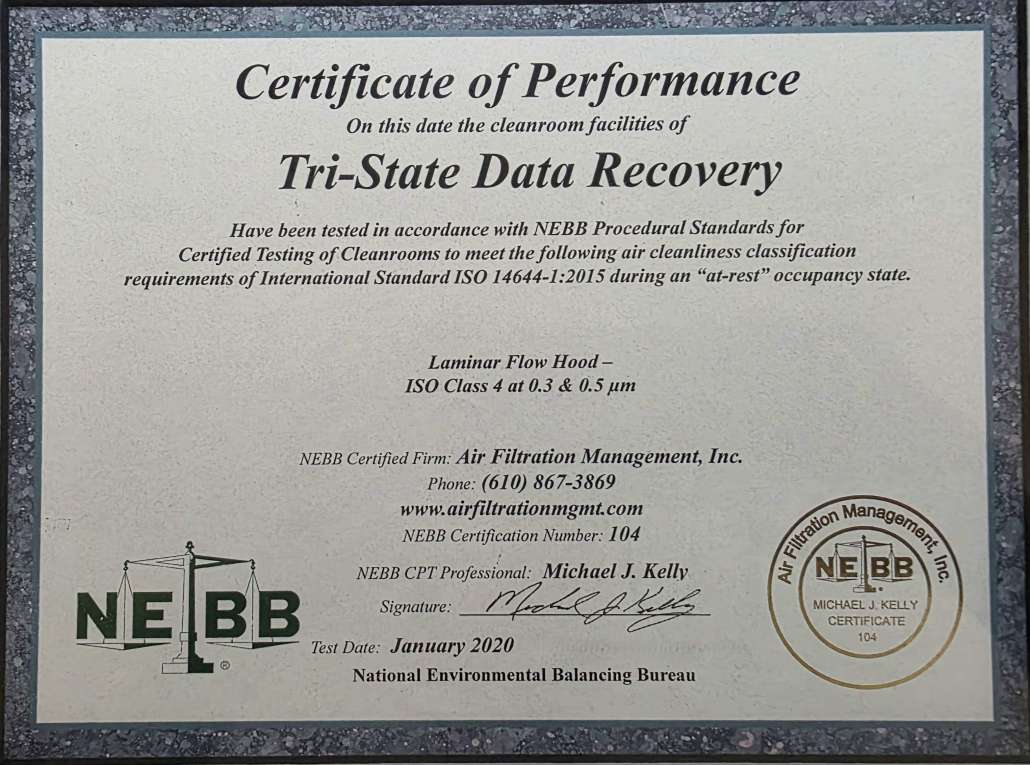
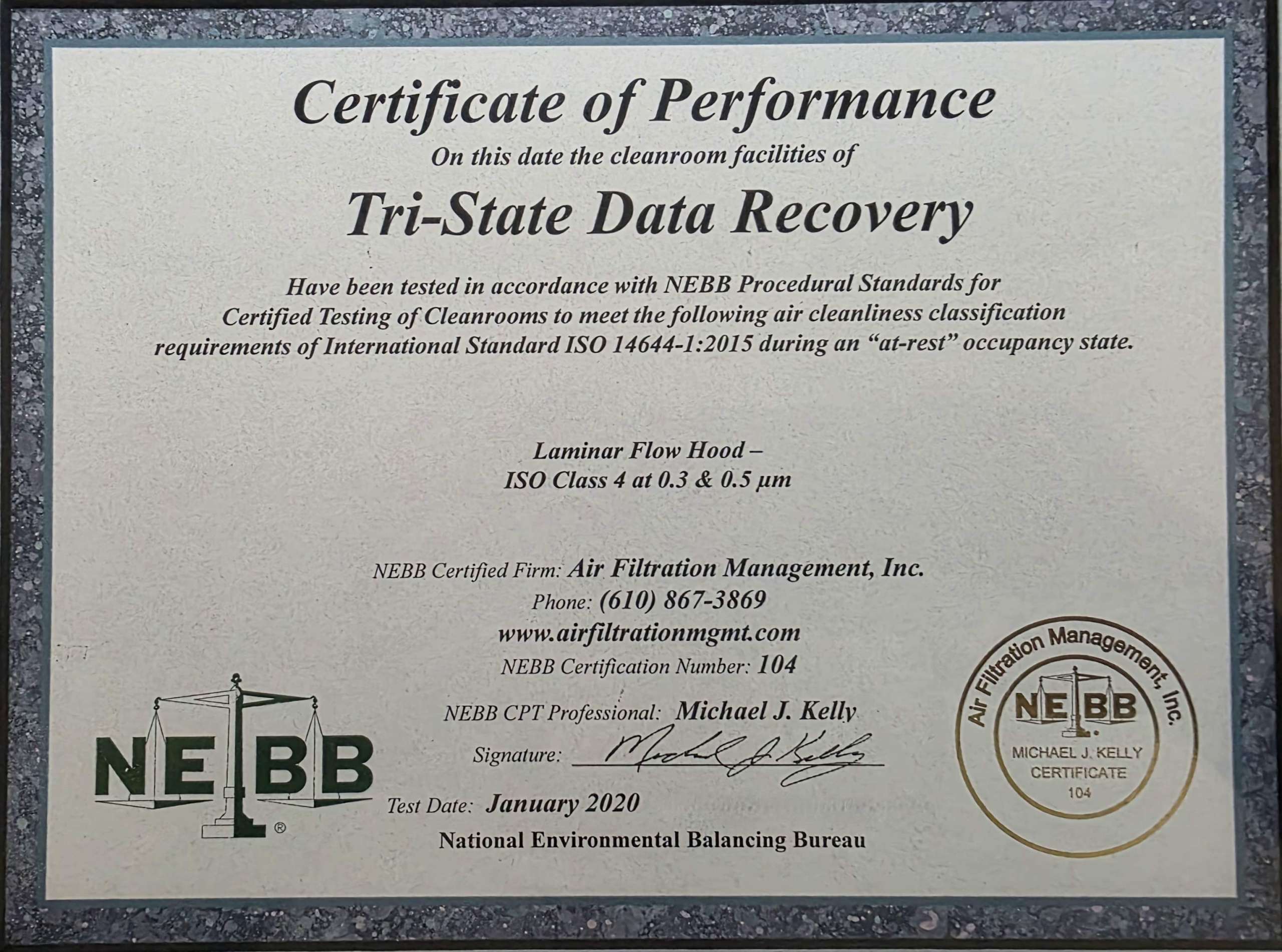
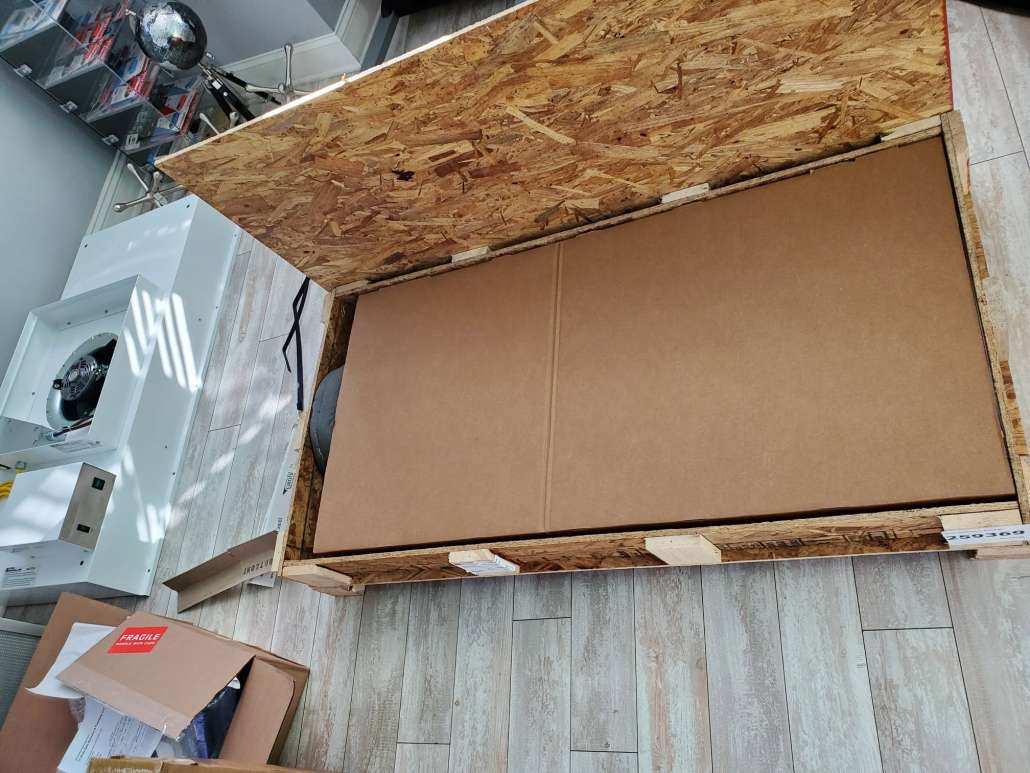
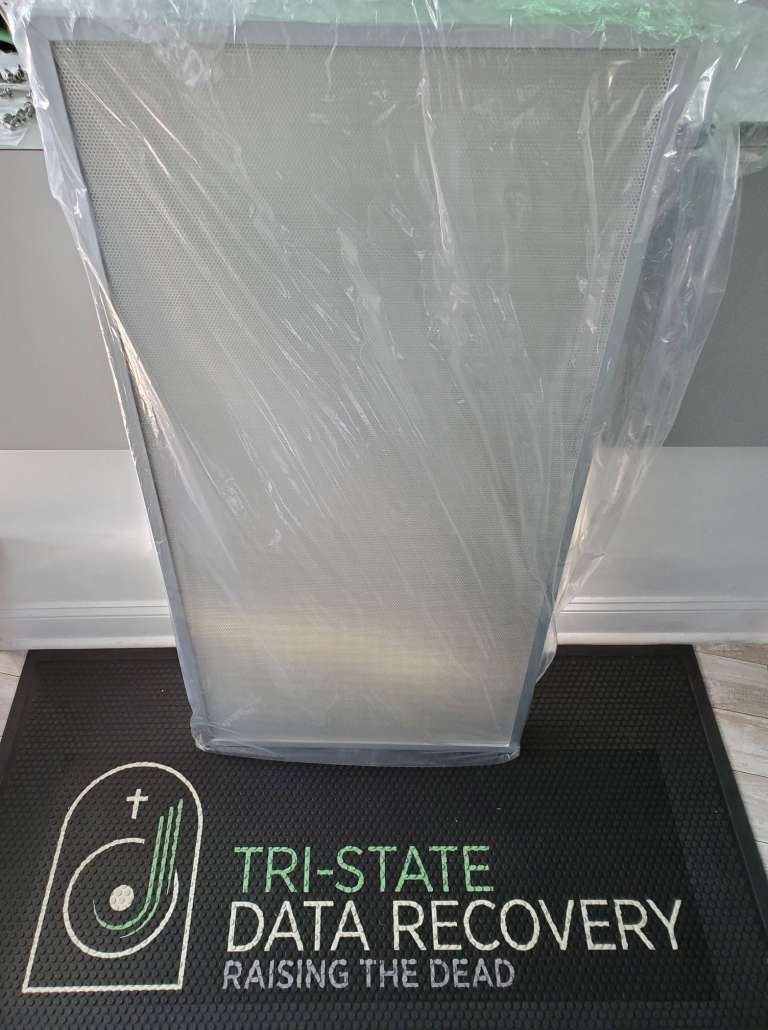
That’s why opening a drive on a desk, in a garage, or in a repair shop’s back room with an untested flow-hood isn’t a shortcut — it’s contamination. Our clean rooms are both quality-tested and independently certified on-site to ISO Class 4.

ISO 14644-1 runs 1 to 9. Lower is cleaner, and each step permits about ten times more airborne particles than the one below. “ISO-certified” with no number tells you nothing — Class 9 is roughly an ordinary office.

“Class 100,” which many companies still advertise, comes from a federal standard withdrawn in 2001. It corresponds to roughly ISO 5, about ten times dirtier than the ISO Class 4 this work is done to.

That difference is invisible until a drive is open. When platters are exposed for hours during a multi-disc recovery, the air above them matters more than anything else on the bench — which is why we built a larger, cleaner hood rather than working only from the 18-to-24-inch ISO 5 enclosures most of this industry uses. And had them independently certified by a NEBB firm rather than a non certified $200 consumer particle counter advertised by most companies.

Donor matching matters just as much as the environment: replacement heads must come from a compatible drive — same model family, matching firmware revision, and compatible manufacturing parameters — or the transplant fails. Sourcing and matching donors correctly is a core part of what separates a professional laboratory from a shop with a screwdriver.
OUR CLEAN ROOM PROCESS

How a Physical Recovery Actually Works

In professional data recovery, your drive is labeled on intake and diagnosed properly with industry leading technology to determine the cause of the failure and the appropriate actions required to maximize the odds of a successful data recovery attempt.  

𝟏

No-Power Assessment

A physically failed drive is never “tested” by powering it on and attempting a scan with consumer software. Diagnosis starts with what you heard, the drive’s history, and internal inspection — not another damaging spin-up.

𝟐

Clean Room Inspection

Drives that we receive for data recovery that are noted as being dropped, making strange sounds, or having been tampered by computer shops are opened in our certified clean room and examined under magnification — platter condition, head state, and motor function assessed before a recovery plan is set.

𝟑

Donor Part Matching

Replacement heads or motor components are sourced from a precisely compatible donor drive — matched by model, firmware family, and manufacturing parameters.  Sometimes we need to use several sets of heads if they become destroyed again during the process due to media damage on the disks surfaces.

𝟒

Rebuild & Controlled Imaging

With replacement components installed, the firmware is checked and the drive is imaged immediately by creating a file table and targeting the sectors containing the user data using hardware tools that treat it as fragile — head-by-head, gentlest data first, minimal stress.

𝟓

Verify & Transfer

Recovered data is parsed by separating any damaged files, verified, and transferred to a healthy drive of your choice. You review your files before final payment — no recovery, no charge beyond the diagnostic.

Head Crash

The read/write heads have failed or made contact with the platter surface — the classic rhythmic clicking. The head stack must be replaced with a precisely matched donor assembly before any service area work can be performed or any data can be read.  This can be caused from a physical bang or even just happen over time.

Seized Spindle Motor

The motor that spins the platters has locked up — often after a drop or from bearing failure. The drive hums, buzzes, or beeps as it tries and fails to spin. Motor work or platter migration to a donor chassis is required.

Stiction — Heads Stuck to Platters

The heads have adhered to the platter surface instead of parking, pinning the platters in place. Common after a drop while running or a hard power cut. The heads must be carefully freed and replaced with precision tools — never by percussion or force.

Attention Attention

Degraded Heads

One head in the stack has failed while others still read. The drive works intermittently or only recovers part of its capacity. Head-by-head imaging captures what the healthy heads can reach; a head replacement addresses the rest.

Droplet Droplet

Water, Fire & Contamination

Flood-damaged, fire-exposed, or previously opened drives. Contaminated platters require careful cleaning and assessment in a controlled environment before any read attempt.

Alert Alert

Opened or Previously "Repaired" Drives

Drives opened outside a clean room — by a curious owner or an unequipped shop — arrive with dust contamination and finger prints and often mishandled internals. We regularly take on and recover these second-chance cases, at a higher cost and lower recovery rate than when the problem began.

EVERY BRAND

Hard Disk Drives We Recover

Due to extensive industry consolidation, only three major companies manufacture the underlying mechanical hard disk drive (HDD) mechanisms today. Dozens of other brands exist, but they function as external drive packagers or resellers using components from these key producers.

  • Western Digital: One of the largest manufacturers of internal drives for desktops and laptops, producing both mechanical HDDs and solid-state drives (SSDs).
  • Seagate: One of the oldest and largest HDD makers, offering a comprehensive lineup ranging from consumer desktop drives to massive enterprise server arrays.
  • Toshiba: The third major survivor in the mechanical hard drive industry, producing a wide variety of 2.5-inch and 3.5-inch drives.
Western Digital:
WD Blue – WD Black – WD Red – WD Purple – WD Gold – WD Enterprise – WD Green – Ultra Star – WD Helium – WD Mybook – WD My Passport
IBM
Acquired by Hitachi in 2003 for $2.05 billion
Hitachi Global Storage Technologies (HGST):
Formed from IBM’s division, HGST was acquired by Western Digital in 2012 for $4.3 billion. The HGST brand was phased out entirely by 2018.
SanDisk / G-Technology:
SanDisk was acquired by WD in 2016. While primarily an SSD/Flash brand, its premium external HDD brand “G-Technology” was rebrand as SanDisk Professional.
Seagate
Seagate BarraCuda – Seagate FireCuda – Seagate IronWolf – Seagate SkyHawk – Seagate Exos – Seagate Mozaic – Seagate Expansion – Seagate Portable – Seagate One Touch
Conner Peripherals:
A massive rival in the early 1990s, acquired by Seagate in 1996.
Maxtor:
Acquired Quantum’s HDD business in 2001, then Maxtor itself was acquired by Seagate in 2006 for $1.9 billion.
Samsung HDD Division:
Samsung’s mechanical hard drive business was acquired by Seagate in 2011.
LaCie:
A premium consumer external drive brand, acquired by Seagate in 2012.
Toshiba
Toshiba L200 Series – Toshiba P300 Series – Toshiba X300 / X300 Pro – Toshiba N300 Series – Toshiba S300 Series – Toshiba MG Series – Toshiba Canvio Basics
Fujitsu HDD Division:
Fujitsu’s hard drive manufacturing business was completely acquired by Toshiba in 2009.
Western Digital 3.5-inch Assets:
In 2012, as a condition for anti-trust approval to buy Hitachi, WD was forced to grant Toshiba the equipment and intellectual property to manufacture 3.5-inch desktop/enterprise drives.
All EIDE and IDE hard drivesAll SATA, SAS, & SCSI hard drivesAll USB & External form factor hard drives

Modern drives — helium-filled, monolithic, SMR — demand more than a clean room. See how we use X-ray imaging to inspect them before recovery begins.

LEVEL CHECK

✓ Clean room recovery applies when…
  • The drive clicks, grinds, scrapes, or beeps when powered on
  • The drive was dropped, knocked over, or physically impacted
  • The drive won’t spin up at all, or hums without spinning
  • It was exposed to water, fire, or was previously opened
  • Another shop already attempted recovery and failed

These symptoms mean the failure is inside the sealed drive assembly — and no software, adapter, or circuit board swap can reach it.

→ You may need a different level if…

The diagnostic determines the level definitively — and if a case turns out to be simpler than it sounded, your quote reflects the simpler tier, not the worst-case one.

WHAT A HELIUM DRIVE ACTUALLY REQUIRES

Helium-sealed drives are not ordinary drives with a different label. The enclosure is hermetically sealed at the factory because helium is about one seventh the density of air, and the entire mechanical design depends on it. The heads fly closer. The platters are thinner, so more of them fit. Turbulence that would be unacceptable in air is manageable in helium. Remove the helium and you have not opened a hard drive. You have changed the physics the drive was engineered around.

The moment the seal is broken, helium leaves and air replaces it. Fly height, damping and turbulence all shift at once, on a stack that may carry a dozen or more heads. The drive may still spin and may still read, and that is the trap, because it will not do so reliably or for long. A helium drive opened and run in air is a single attempt, not a process. Whatever imaging you are going to get, you get once.

There are two ways to work with that, and they are the only two. The drive is refilled with helium after the work is done, purging the air out through the release port as the helium goes in and resealing the enclosure. Or the drive is opened and operated inside a sealed enclosure flooded with helium, so the atmosphere is never lost in the first place. Neither is a small piece of equipment and neither is something a repair counter owns. We have performed research and development on different approaches here, because there is no supplier you can buy this from the way you buy a laminar flow hood.

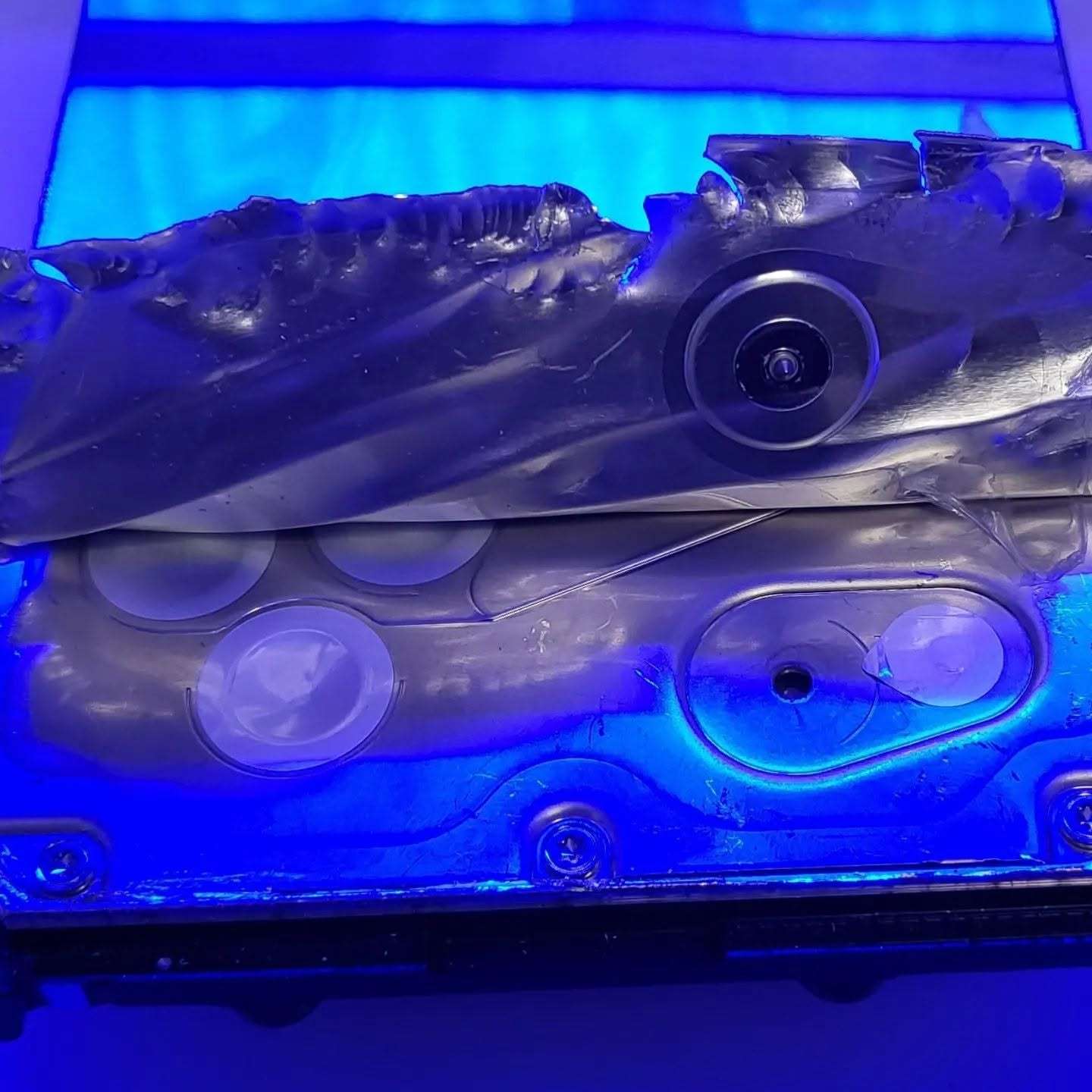
The factory hermetic foil seal peeled back from a helium-sealed hard drive lid, exposing the fill port beneath

The factory hermetic seal, lifted. This foil is the only thing holding the helium in, and the port beneath it is where a refill has to go back in. Disturb this and the drive is no longer the machine its engineers designed.


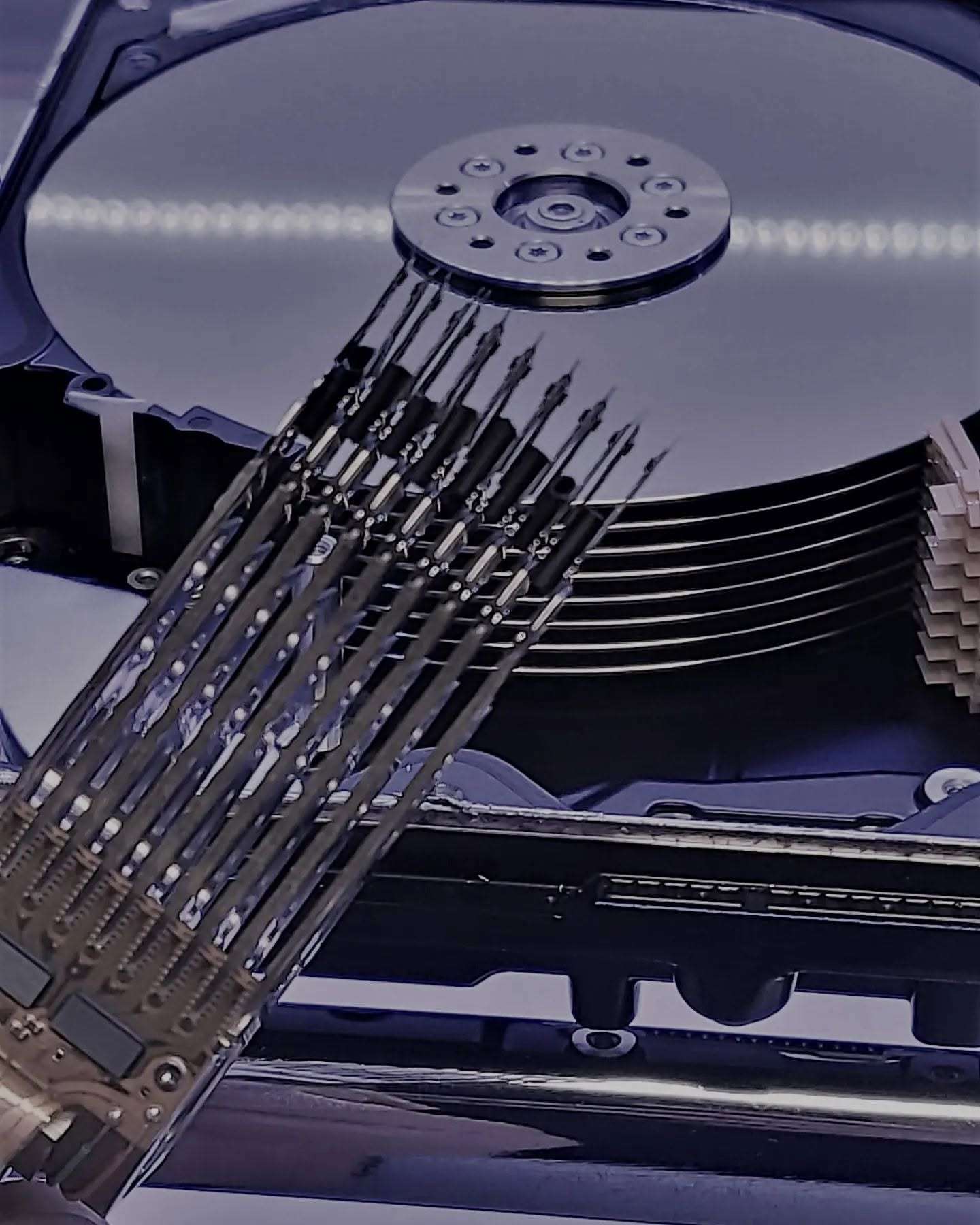
A 12TB helium-sealed hard drive opened in the clean room with its sixteen-head stack withdrawn from the platters

A 12TB helium-sealed drive, sixteen heads, opened in our clean room during development work. The moment the seal is broken the helium is gone and every head on that stack is flying in air.


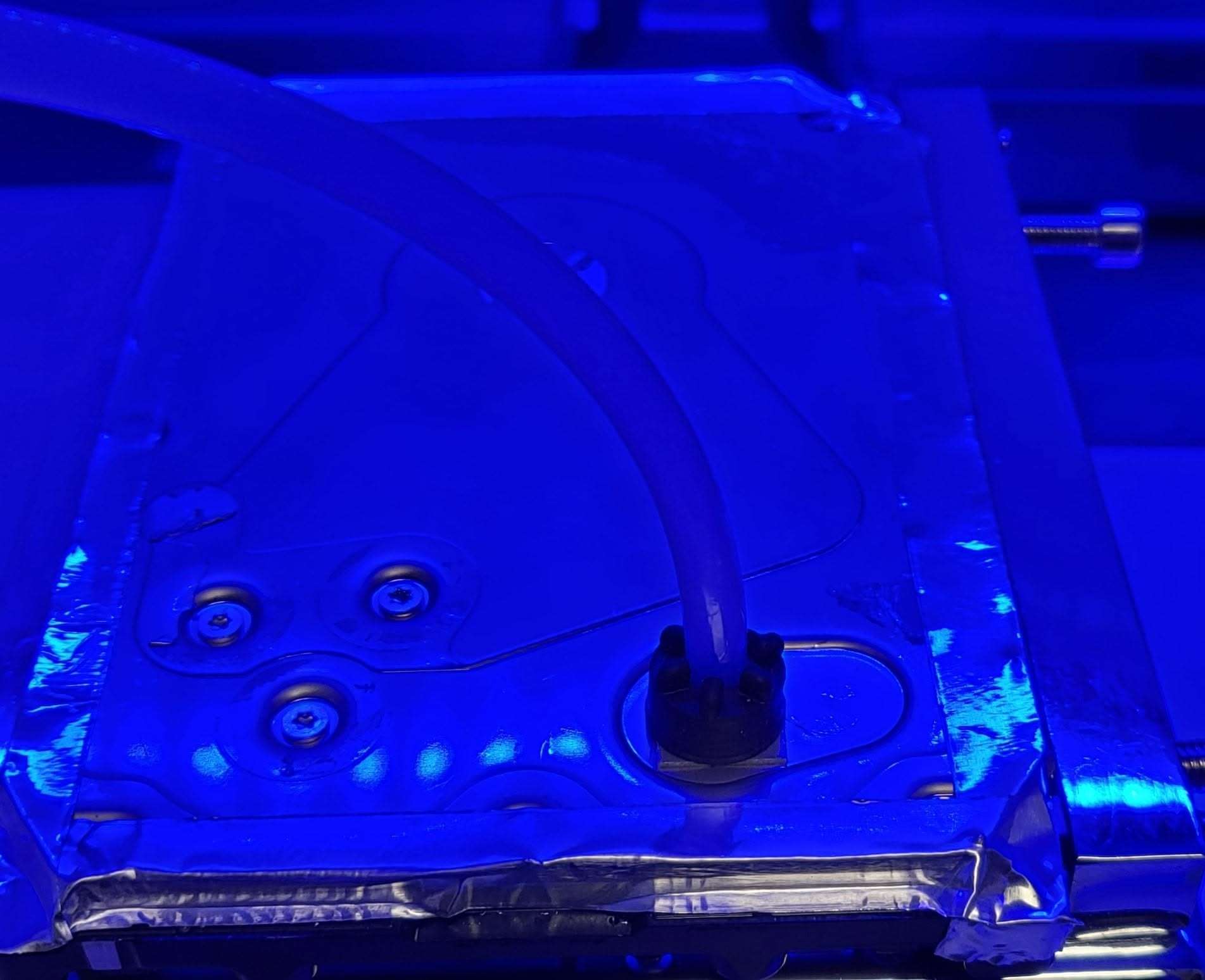
Helium being fed into a resealed hard drive enclosure through the release port during a refill

Refilling the enclosure through the release port, purging the air back out as the helium goes in. This is development work in our own laboratory, not a photograph of equipment anyone sells.

A point that gets missed: a helium enclosure and a clean room are not alternatives. The enclosure controls the atmosphere. The clean room controls the particles. Opening a helium drive inside a sealed helium box that nobody has ever particle-tested means you have solved the gas and left the platters exposed to whatever is in that box. Both problems are real, and only one of them has a number you can ask for.

Then there is the part no enclosure solves. Modern drives carry adaptive data unique to that specific drive in firmware, and getting to it means unlocking the service area. Without service area access there is very little to be done, whatever the gas is. Support for that is model by model and family by family. Helium drives are not one thing: different manufacturers, different generations, different architectures, and firmware access that exists for some and does not exist for others. A drive that is fully supported and a drive that is not can sit on the same shelf at the same capacity.

Which is why “we do helium recovery” is not an answer to anything. The honest answer names your drive. If you have a helium-sealed drive and a laboratory has quoted you, ask three things. Is this specific model and firmware family supported for service area access, or is that being assumed? What is the drive opened inside, and what is the measured class of that air, certified by which firm and on what date? And is the helium replaced before imaging, or is the drive being run in air as a one-time extraction?

A laboratory that has actually done this work will answer all three in a couple of sentences, because these are the questions it asks itself before it accepts the case. If you have a helium drive that needs data recovery contact us with the exact model and description of the problem, and we’ll let you know if this is a case we can accept before charging you anything or taking up your time.

WHAT SETS US APART

Trained in Europe. Trusted Locally. Built for Forensics.

A damaged circuit board once stood between a family and their only wedding videos — see how a processor chip transplant in our lab recovered every irreplaceable memory.

Lifebuoy Lifebuoy

Precision Equipment, Steady Hands

Removing heavy magnets, ramps, stoppers, and other internal parts without damaging or contaminating the sensitive platters inside the drive that contain your data requires years of experience, patience, and skill, not taught by American institutions.

Heart Heart

We‘ll Tell You When It’s Not Worth It

If the cost of the recovery attempt is high and the odds of success are low due to it’s current state, then we will give you our honest recommendation rather than costing you hundreds of dollars in failed attempts.

Independently Certified ISO 4 Clean Room Independently Certified ISO 4 Clean Room

Independently Certified ISO 4 Clean Room

Our clean room was built from scratch in 2020 and independently certified to ISO Class 4 under ISO 14644-1:2015 by an outside NEBB-certified testing firm, ten times cleaner than most companies advertise. Filters are maintained and the room is particle-tested on a recurring schedule.

Cancel-circled Cancel-circled

We Never Outsource — Ever

We have spent years traveling through Europe participating in in-lab collaborations with some of the top data recovery engineers along with developer trainings from the worlds leading tools to provide America with a safer choice for data recovery.

Key Key

HIPAA-Compliant & Forensically Sound

Businesses and professionals trust us with their hard drives that contain sensitive information.  We follow strict guidelines to ensure that your data is secure and no information leaks and can supply a business associates agreement upon request.  
Heart-empty Heart-empty

Transparent Pricing — No Surprises

A flat diagnostic fee buys a real, honest assessment of your drive.  We’ll provide you with the cause of the problem, odds of success, and a firm quote based on a successful data recovery.  No obligation or costs other than the diagnostic fee if the case doesn’t work out  or isn’t worth the cost of recovery for you.

TRANSPARENT PRICING

What Does Clean Room Data Recovery Cost?

$1500+

Based on drive model, capacity, extent of damage, and time involved in extracting your data.  A firm no obligation quote will be given before any work is performed.

In certain cases on newer drives, the cost of parts can be expensive and the odds of success may be low.  We may ask for a non-refundable parts deposit to proceed with the recovery attempt.  This assures that we do not lose any money if the recovery does not work out.

  • Flat diagnostic fee — thorough in-lab diagnoses by our engineer
  • A no obligation firm quote provided before any recovery work begins
  • No recovery = no charge beyond the diagnostic
  • No hidden fees or surprise markups — ever
  • Replacement drive can be supplied by you or purchased from us at cost
  • 20% military, veteran, and student discount with valid ID
  • Full pricing breakdown →

REAL RESULTS

What Our Clients Say About Clean Room Data Recovery

4.9 stars across over 300 Google and Facebook reviews

★★★★★

“Don from Tri-State Data Recovery did a superb job in the clean room recovering data from my WD EasyStore 5TB USB drive. I brought it to a big-box electronics retailer first — they said there was nothing that could be done, it needed recovery in a clean room. Don was able to recover well over 95% of my data.”

★★★★★

“Was able to recover all of our data off of a hard drive that was inaccessible to us and another data recovery business. Easy to communicate with and received our drive back quickly.”

Robert Satchell
Google Local Guide Review

★★★★★

“Unbelievable service! I am so happy I found Tri-State Data Recovery after my company’s main computer was fried after a power surge so great it blew the meter off my building, Literally. I found out the hard way that my offsite back-ups were not working for over a year. Don was able to get 99+% of my files back from my damaged Hard drive after the G squad was unable to get a single file. When the “Geeks” couldn’t help I called a friend who does I.T. work. He referred me to his top I.T. expert. Yes, my I.T. guy has an I.T. guy and this expert recommended that no one but Don should touch this hard drive. He was right! I wish I took it to Don first which could have saved me a week. Don was quick and thorough. All of my company information was saved. A+++”

Mike Phillips
Google Local Guide Review

★★★★★

“It’s extraordinarily difficult to find a local clean-room for data recovery. But here it is. Tri-State was efficient, honest and fair. They had a quick turn around, were upfront about the realities of saving the files and diligently persevered to rescue my data. Don saved my hard drive, which had suffered physical damage after a fall and was completely inaccessible. 99% of my data was recovered for a fair price. I cannot recommend Tri State Data Recovery more highly. So grateful.”

Emilie Krause
Google Local Guide Review

FREQUENTLY ASKED QUESTIONS

Clean Room Recovery FAQ

The rhythmic clicking is the actuator arm sweeping across the drive and slamming back to its rest position, over and over. The heads have failed or lost calibration, can’t find the servo data they need to position themselves, and the drive keeps retrying. If the heads are physically damaged, each sweep risks contacting the platter surface — which is why continued power-ons are the most destructive thing that can happen to a clicking drive.

No — both are recovery folklore that destroys drives. Tapping or twisting a drive with stiction can tear the stuck heads and rip the magnetic coating off the platters where they’re adhered. Freezing does nothing for mechanical failure and adds condensation damage on top. Stiction is resolved by carefully freeing the heads with specialized tools in a clean room — a delicate procedure, not a percussion trick.

Possibly — but we still may have a chance, and added expenses like a decontamination fee for the extra work involved. Drives opened by amateur shops in uncontrolled environments arrive with dust contamination and mishandled internals, both of which complicate recovery. We regularly accept these second-chance cases and succeed on many of them. We’ll need all original parts and will begin with an extensive diagnostic to determine if there is a chance.

Replacement heads and motors don’t come from a parts catalog — they come from another working drive of a precisely compatible type. Head assemblies vary between drive families, firmware revisions, and even manufacturing runs. A close-but-wrong donor may physically fit and still fail to read your platters. Correctly identifying, sourcing, and matching donors is one of the core skills that separates a professional data recovery laboratory from a repair shop.

No — and it shouldn’t be. Clean room recovery restores the drive to a readable state just long enough to extract your data; it does not restore the drive to reliable service. A drive that has suffered a head crash or motor failure has reached the end of its life. Your recovered data is transferred to a new, healthy drive, and the original should be retired permanently.
Clean room cases are the most involved tier — donor sourcing, rebuild work, and careful imaging all take time, with most cases spanning several business days to a couple of weeks depending on donor availability and platter condition. Depending on parts availability, most cases can be completed between 1-2 weeks.  Expedited emergency service is available for business-critical cases.

🎖 Military & Veterans Discount

Tri-State Data Recovery proudly offers a permanent 20% discount on all data recovery services for active military and veterans with valid military ID. We understand your sacrifice and are honored to serve those who served us.

Your Data Deserves a Real Laboratory.
Not a Middleman.

Clicking. Beeping. Dropped.
This Is What Our Clean Room Is For.

Physical hard drive recovery is the service everyone advertises and almost nobody performs. Ours happens on-site, in a certified clean room, with your drive never leaving our hands — since 2011.