Data Recovery
Lincroft, New Jersey
ASK
FOR THE CERTIFICATE BEFORE YOU SHIP
FIFTEEN YEARS, AND THE FIRST FOUR WERE HERE
We Didn’t Expand Into New Jersey. We Started Here.
Don Anderson was born in New Jersey, and Tri-State Data Recovery was founded there too — Gibbstown, in 2011. In 2012 the laboratory moved to Millville, where the Press of Atlantic City wrote the first article anyone published about this work. In 2013 it moved again to Gloucester City — and that’s where a reporter from the Philadelphia Inquirer visited the operation. Those pieces are still live over a decade later.
In January 2013, in Trenton, he was qualified and gave expert testimony before the New Jersey Office of Administrative Law. His degree is from Cumberland County College. This is not a Pennsylvania company reaching across the river — New Jersey is where the business was built, and thousands of New Jersey drives have crossed this bench since 2011.
The laboratory is in Montgomery County now, and we’ll be straight that Lincroft is a drive. But when a mail-in operation tells you geography doesn’t matter, it’s worth knowing which of the two companies in front of you actually has a fifteen-year New Jersey record — and which one can hand you the paperwork for it.
How to Tell a Laboratory From a Website
Ask these of anyone you’re considering, including us. The answers are documents or they’re adjectives, and the difference is the whole decision.
Question 1
What platform do you use, and are you certified on it?
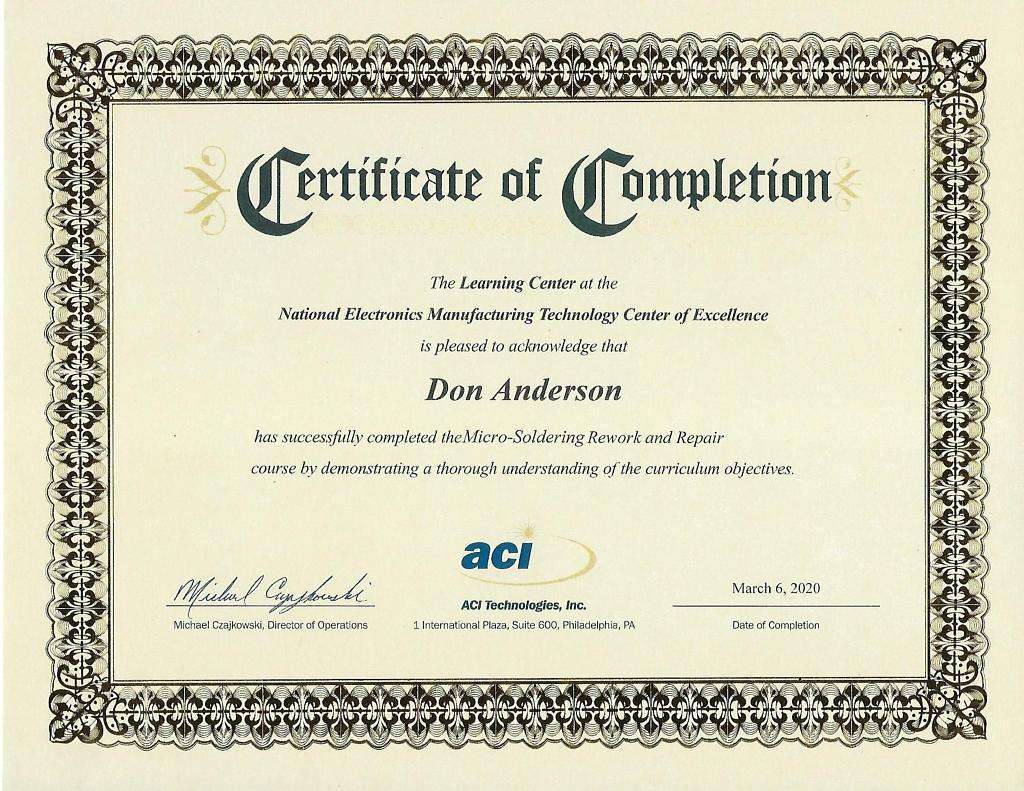
There two industry leading professional systems used in “data recovery”, PC-3000 and DeepSpar. Manufacturer certification is a document with a date, a city and a signature on it. “Advanced proprietary tools” and “industry-leading software” are what people say when there is no certificate to name.
Our answer: Expert certification on both PC-3000 and DeepSpar, earned in Prague and Ottawa because this trade isn’t taught in the United States
Question 2
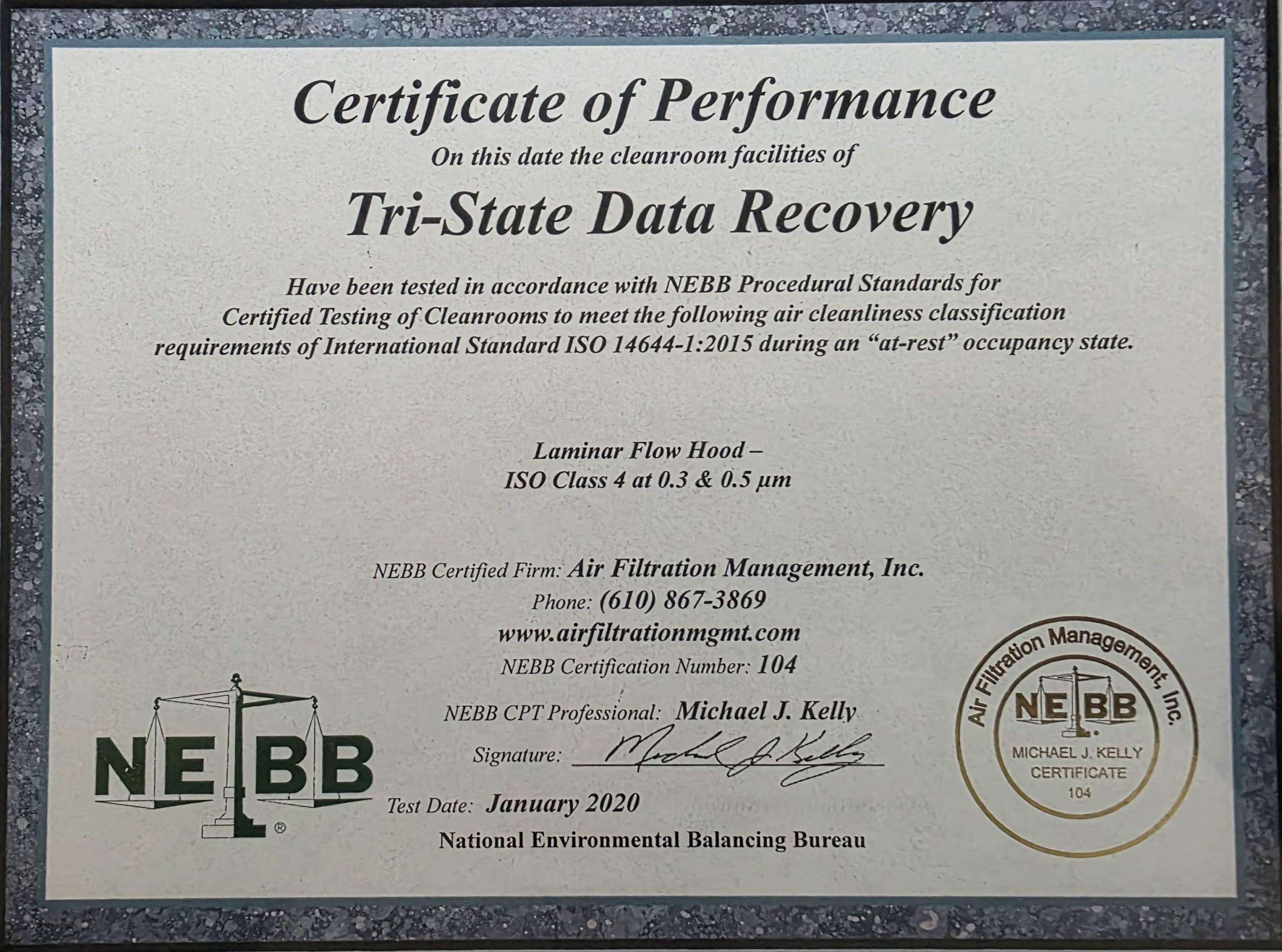
Do you have a clean room, and will you send me the certificate?
Anyone can type “certified clean room.” A certificate names the testing firm, the standard, the classification, the date and the technician who signed it — all of which you can check. Ask for it before you ship. Watch what happens.
Our answer: Both of our clean rooms verified by A NEBB Certificate of Performance naming the testing firm, the ISO 14644-1:2015 standard, the classification and the technician who signed it — emailed to you today
Question 3
Who personally performs the recovery, and can I speak to them?
You should get a name, not a department. If the person who does the work is unreachable by the person paying for it, that becomes a problem at exactly the moment you’d want to ask a question — when something has gone wrong.
Our answer: Don Anderson, born in New Jersey, founded this company there in 2011, and qualified as an expert before the New Jersey Office of Administrative Law in 2013
Question 4
What happens to my data afterwards?
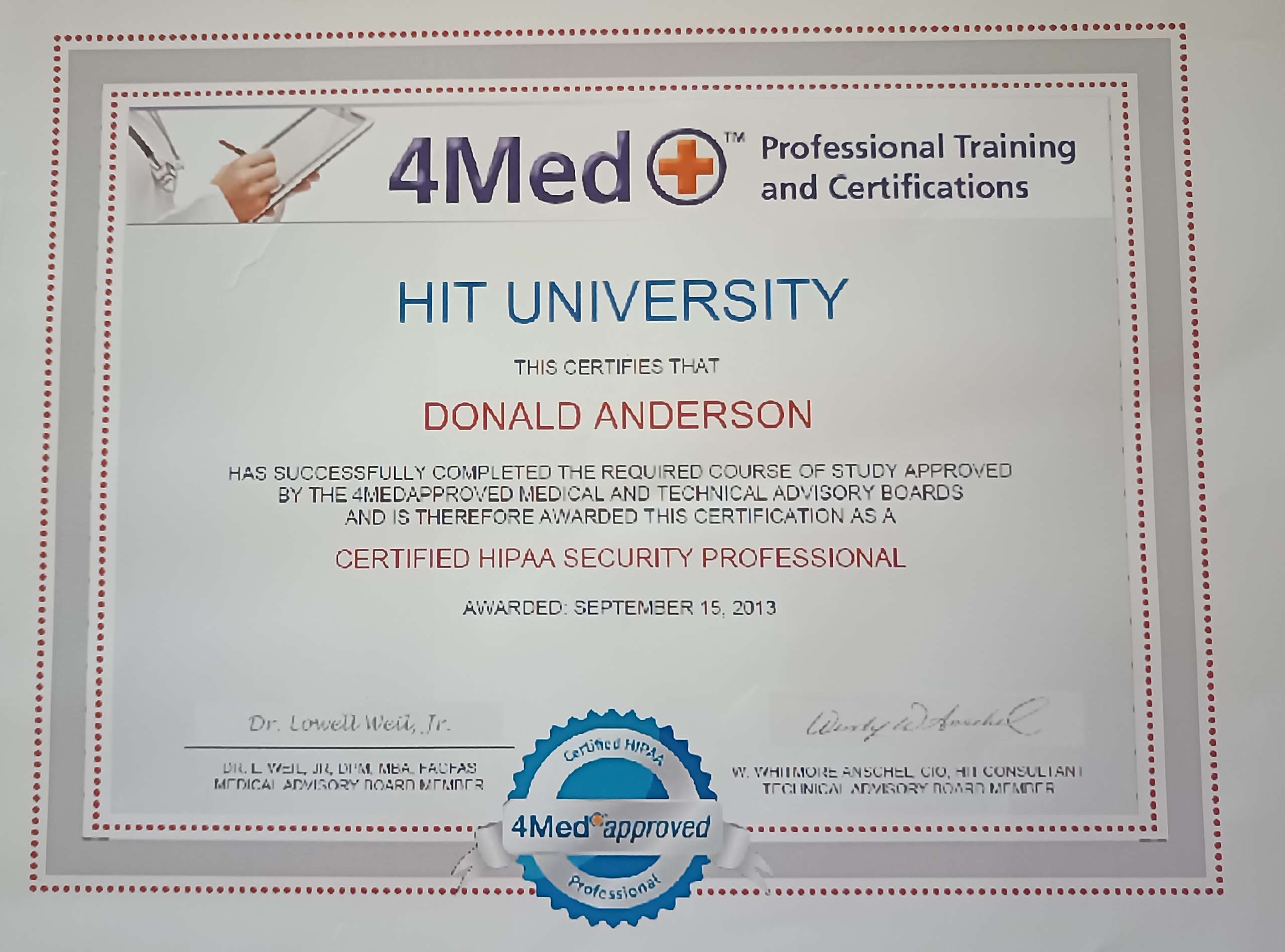
A real answer has a timeframe in it. Ours: recovered data is securely erased two weeks after completion unless you arrange otherwise in writing, and nothing is ever forwarded to a third party. Vagueness here is its own answer.
Our answer: The number is at the top of this page · securely erased after two weeks.
EXPERIENCE THE DIFFERENCE
Documented, or Merely Confident
WHAT WE RECOVER
From Coursework to Coastal Flood Damage
Hard Drive Recovery
Clicking, grinding, seized and dropped drives; head crashes, firmware faults and bad sectors. Damaged head assemblies replaced with precision-matched donor parts inside our certified clean rooms.
SSD & NVMe Recovery
Controller failure, firmware corruption and degraded NAND-level recovery on solid-state drives that are no longer recognized. Degraded NVMe drives require specialized hardware, not a software license.
RAID, NAS & Servers
Failed rebuilds, simultaneous drive failures and degraded arrays for practices and businesses along the Newman Springs and Route 35 corridors. Power down and call before anyone rebuilds.
Flood & Storm Damage
A Monmouth County specialty by necessity. Fried circuit boards require ROM removals. Corrosion continues long after a drive appears dry and salt water moves faster than fresh — don’t power it on, don’t apply heat, seal it in a bag and call. Delay is what costs these cases.
Mac & Surface Pro
MacBook SSDs, Fusion Drives and, in some cases, soldered Apple storage where the NAND is fused to the logic board. Microsoft Surface where storage is soldered to the mainboard. No drive to remove — recovery is board-level micro-soldering.