Data Recovery
Boyertown, PA
40 MIN
DOWN 100 AND 422 – PARKING AT OUR END
TWO DIFFERENT TRADES
Where One Job Stops and the Other Starts
Computer repair makes a machine work again. Software is reinstalled, components are replaced, and a failing drive is treated as a part to be swapped out. It’s a real trade with its own skills, and most data loss never gets past it — a deleted folder, a corrupted file system, a machine that won’t boot with a perfectly healthy drive inside it.
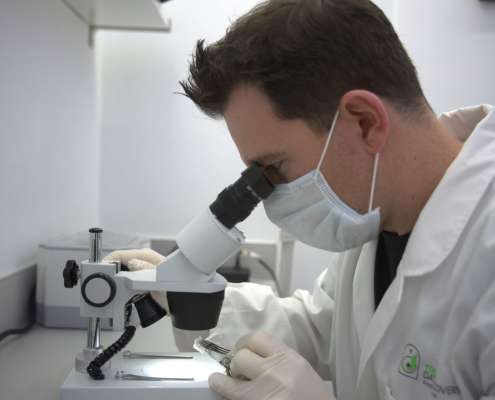
Laboratory data recovery starts where that ends. The drive is the job and the machine it came out of is irrelevant. A head assembly is replaced with precision-matched donor parts in filtered air. Firmware and service-area faults are repaired using donor resources and purpose-built hardware. The drive is mapped so the damage can be worked around, and the sectors holding your data are targeted and imaged — so the recovery happens on a clone rather than on your original.
The distinction matters because the tools of one damage the cases of the other. Recovery software run on a physically failing drive forces hours of continuous reading across bad sectors, with no head map, no way to work around the damage, and no way to target the data — on a drive that may have minutes left. Reinstalling an operating system overwrites the area your files occupy. Both are ordinary repair steps, and both can end a recovery permanently.
So the useful question isn’t who’s good. It’s which trade your case is in — and the fastest way to find out is to describe the symptom out loud. If it clicks, grinds, was dropped, went through water, or isn’t detected at all, it’s the second one, and no amount of skill at the first will reach it.
FOUR QUESTIONS, TWO MINUTES
What the Category Label Can’t Tell You
All four work on us as well as on anyone else. Ask them before you hand over a drive.
1. DOES ANYONE AT THIS ADDRESS OPEN DRIVES?
“Drop-off,” “intake” and “coordination point” all mean no. Companies using those words are being straight with you as far as it goes — the part they leave out is where elsewhere is, the name of the person opening your drive and viewing your data, and how many hands the drive passes through getting there
Our answer: yes, in our own certified and secure Montgomery County laboratory with the chain of custody documented and available
2. IS THIS THE ADDRESS WHERE THE WORK HAPPENS?
Some listings publish what the business itself calls a mailing address. Some show a unit in a shared building acting as a front. Some show one address here and a different one on other directories. Put it into Street View, and search the street number on its own to see who occupies it.
Our answer: Our headquarters is located at 630 Freedom Business Center Drive, Floor 3, King of Prussia, and our name is on the sign board
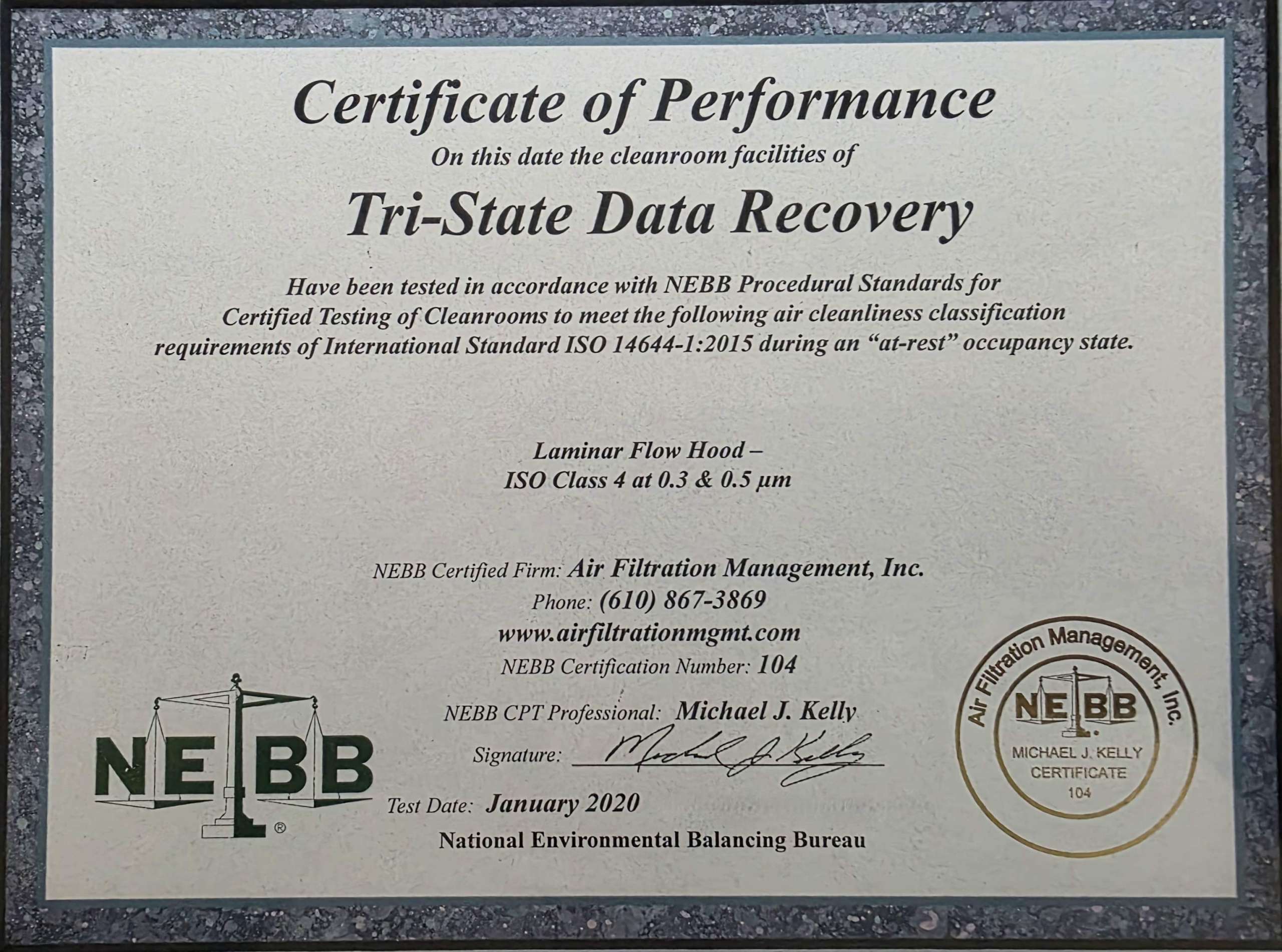
3. WHICH ISO CLASS, AND WILL YOU SEND ME THE CERTIFICATE?
ISO 14644-1 runs 1 to 9, lower is cleaner, each step about ten times. “ISO-certified” with no number tells you nothing — Class 9 is roughly an ordinary office, and “Class 100” comes from a federal standard withdrawn in 2001, corresponding to about ISO 5.
Our answer: ISO Class 4 under ISO 14644-1:2015, certificate viewable now
WHAT HAPPENS IF YOU CAN’T RECOVER IT?
Ask what the diagnostic costs, what the recovery costs, the cost of returning the drive and a written explanation of what was attempted, by who and why it isn’t recoverable. Published answers can be compared before you commit. Answers that only arrive once somebody holds your only copy can’t.
Our answer: $106 diagnostic, most single-drive physical recoveries from $400, nothing further if we can’t recover it, and a paid invoice explaining the procedure by the engineer you are working with.
EXPERIENCE THE DIFFERENCE
A CATEGORY, OR A CERTIFICATE
WHAT WE RECOVER
FARMS, TRADES AND BERKS COUNTY HOUSEHOLDS
Hard Drive Recovery
Hard drives that are clicking, seized and beeping from a drop; head crashes, firmware faults and bad sectors caused from media damage. Weak or faulty head assemblies replaced with precision-matched donor parts inside our certified clean rooms.
SSD & NVMe Recovery
These devices degrade while in use and develop bad sectors , firmware corruption and some times require NAND-level recovery on solid-state drives that are no longer recognized. Degraded NVMe drives require specialized hardware, not a software license.
RAID, NAS & Servers
Failed rebuilds, simultaneous drive failures and degraded arrays for firms, practices and county-adjacent businesses. Power down and call before anyone attempts a rebuild.
TRADES, FARMS & SMALL BUSINESS
Job records, herd and field records, invoicing, QuickBooks database files and the one office machine that runs a contracting or agricultural business. Say if the business is stopped and that case goes to the front of the bench.
Apple & Mac Devices
Macs and MacBooks with a removable SSD or hard drive, Fusion Drives, iMacs, and the MacBook models that carry Apple’s data-recovery (“lifeboat”) connector. Also Airport Time Capsule and LaCie external drives. We don’t perform board repairs on current MacBooks with soldered storage — we’ll tell you that on the first call rather than after we have your machine.
OLD DRIVES & OBSOLETE FORMATS
DESCRIBE THE SYMPTOM, NOT THE DIAGNOSIS
The Fastest Way to Know Which Call to Make
You don’t need to know what’s wrong with a drive to work out who should handle it. You need to describe what it’s doing. Say the noise out loud — a rhythmic click, a scrape, a faint beep, or nothing at all. Say whether the machine sees it. Say whether it was dropped, or went through water, or simply stopped one morning. But don’t continue to power it on after the initial attempt.
Those symptoms sort themselves. Files deleted, folders missing, a machine that won’t start but a drive that’s still detected — that’s the first trade, and it’s most of what happens. Clicking, grinding, dropped, wet, or not detected at all — that’s the second, and it needs a clean room and an experienced engineer.
Call and describe it, and we’ll tell explain what’s most likely wrong with it so you have an idea of what kind of recovery you’ll need. That answer costs nothing and it doesn’t come with a pitch attached — including when the answer is that it isn’t a clean room job at all. Being told that on the phone beats finding it out after a drive has been sitting somewhere for a week.